And so it begins (again).
Hi, I'm Liz (or Elizabeth) and I live on the coast of Maine with my husband and our cat, Gus.
I've had a horseshoe crab itch for many years—not some weird disease (thankfully), but a keen interest that's waxed and waned but never left me.
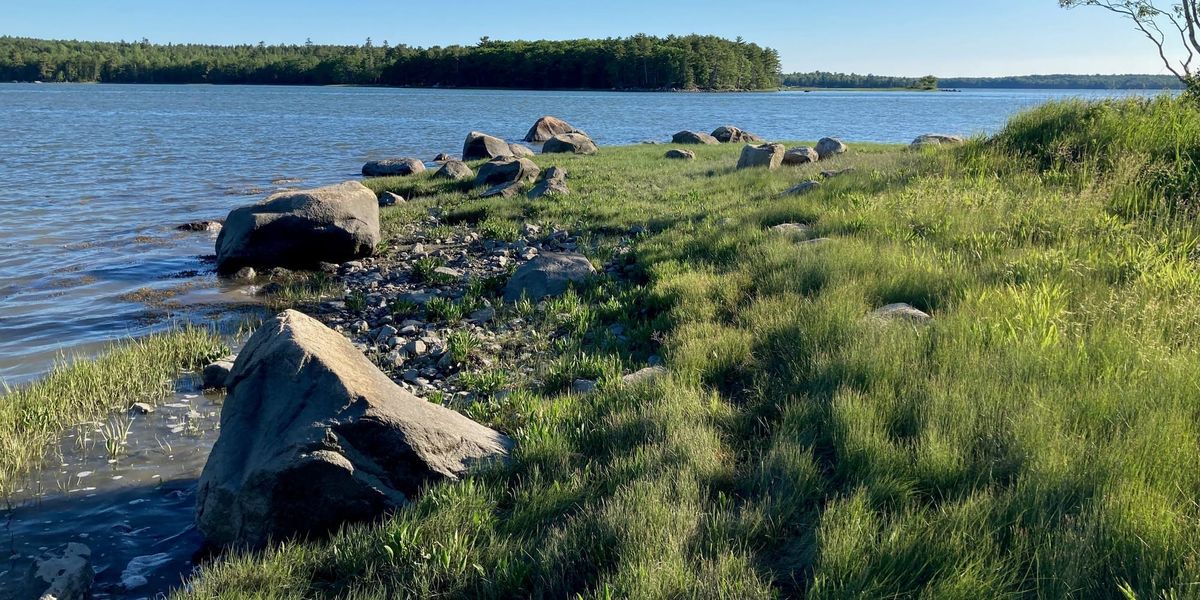
It started when I was in graduate school in 2003, studying environmental communication, and landed a spot on a horseshoe crab (Limulus polyphemus) spawning survey at Taunton Bay on the coast of Maine just north of Ellsworth. I’d spent high school in that area and my parents still lived there, running a bed and breakfast. My mom found out about the spawning survey from her ties with a local conservation group, Friends of Taunton Bay, and heard that they were looking for volunteers. My life in western Massachusetts was falling apart—my job had been eliminated, I had to leave my living situation, and aside from graduate school, I didn’t know what I was going to do next.
I found a way to spend the late spring and summer that year near the bay, living in my parents’ house in between their bed and breakfast guests, waiting tables at a new restaurant a couple towns up the coast to support my horseshoe crab habit. I told my restaurant manager that my availability for shifts would change with the tide cycles, and she looked at me for a few moments to see if I was kidding.
That was a long time ago. Since then, through many life changes, losses and joys, and professional twists and turns, I've checked in with horseshoe crabs from time to time. To see how they’re doing, what we (humans) are learning about them, and from them. Reconnecting with old friends, and finding my curiosity kindled all over again.
I am fascinated by our human relationship with these “living fossils,” who have inhabited coastal areas on Earth for around 450 million years but look very similar today to their ancient forms. They have weathered not just one but several mass extinction events that wiped out many other species, including the one 65 million years ago that ended the age of dinosaurs. They have witnessed continents drifting apart and crashing together, coastlines receding and advancing, and dramatic changes in the chemistry of our oceans.
Horseshoe crabs are clearly resilient, and humans have tested that resilience time and again. We have harvested them by the millions, for fertilizer in the late 19th and early 20th centuries and more recently for use as bait to fish for eel and conch. Since the 1970s, we have harvested their blood and isolated a compound from it to test medicines, vaccines, and devices that are injected or implanted in our bodies for contamination by bacterial toxins that can harm us.
Now horseshoe crabs face complex and compounded threats and changes that are happening at a rapid pace, many of which are fueled by our actions and inactions. Over-harvesting, loss of habitat, pollution, changes in ocean chemistry, and other effects of climate change, to name a few.
Yet there are also bright spots. More and more people are falling in love with Limulus, and working to protect them. The U.S. Pharmacopeia recently approved a synthetic alternative to LAL, the compound from their blood that’s protected us from illness and even death for decades.
There’s reason for despair, heartbreak, joy, and hope. In these pages we’ll explore it all, starting with horseshoe crabs in Maine, where horseshoe crabs teeter on the very northern end of their range. I hope you’ll join me in these Travels with Limulus.
