Waking up
May 16, 2026 | 🌑︎
It’s mid-May on the coast of Maine, a season of mud, shadbush blooming, fiddleheads, and the beginning of a new cycle for horseshoe crabs.
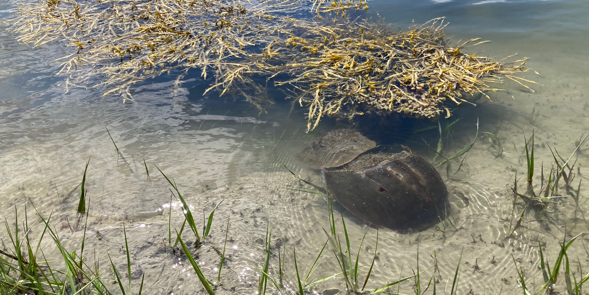
We wait eagerly for the lilacs to burst, and listen in the evenings to the peepers' chorus. Meanwhile, horseshoe crabs (Limulus polyphemus) have been waking up from the long slumber of winter and moving toward the edges of bays and estuaries, to the shores where they emerge each spring and early summer to find each other and start a new generation.
Today is also a new moon, the beginning of a lunar cycle.

Further south, horseshoe crab spawning tends align more or less with lunar phase, peaking around the higher tides at the new and full moon.
Here in the north, the effect of lunar phase is less distinct. Recent research in the Great Bay Estuary in New Hampshire indicates that water temperature, more than lunar phase, is one of the primary signals for horseshoe crabs that it’s time to come to shore and begin digging nests and depositing and fertilizing eggs. One of the findings of the Maine Horseshoe Crab Spawning Surveys, which took place in the early 2000s, was that horseshoe crabs don't begin spawning until the water reaches 13º Celsius (54ºF) and more reliably 14º Celsius (57ºF).
The Maine surveys also indicated that weather conditions including sun and cloud cover, wind, and rain events also influence spawning activity—sunny, warm days with little wind were correlated with higher numbers of horseshoe crabs coming to shore. It’s hard enough for them to get close to the high tide line on these shores of marsh, mud, cobble, and fallen trees. Choppy water from waves and wind would make it harder, maybe even impossible, and increase the risk of being overturned, which leaves them vulnerable to predation and drying out.
We've had a cool and rainy spring on the northern Maine coast, so spawning may begin a little later. This is a season of suspense and anticipation, wondering what the next few weeks will bring. Like waiting for a visit with old friends you haven't seen in a long time.